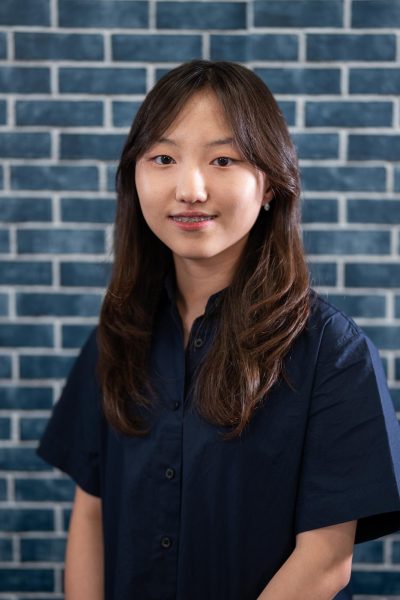

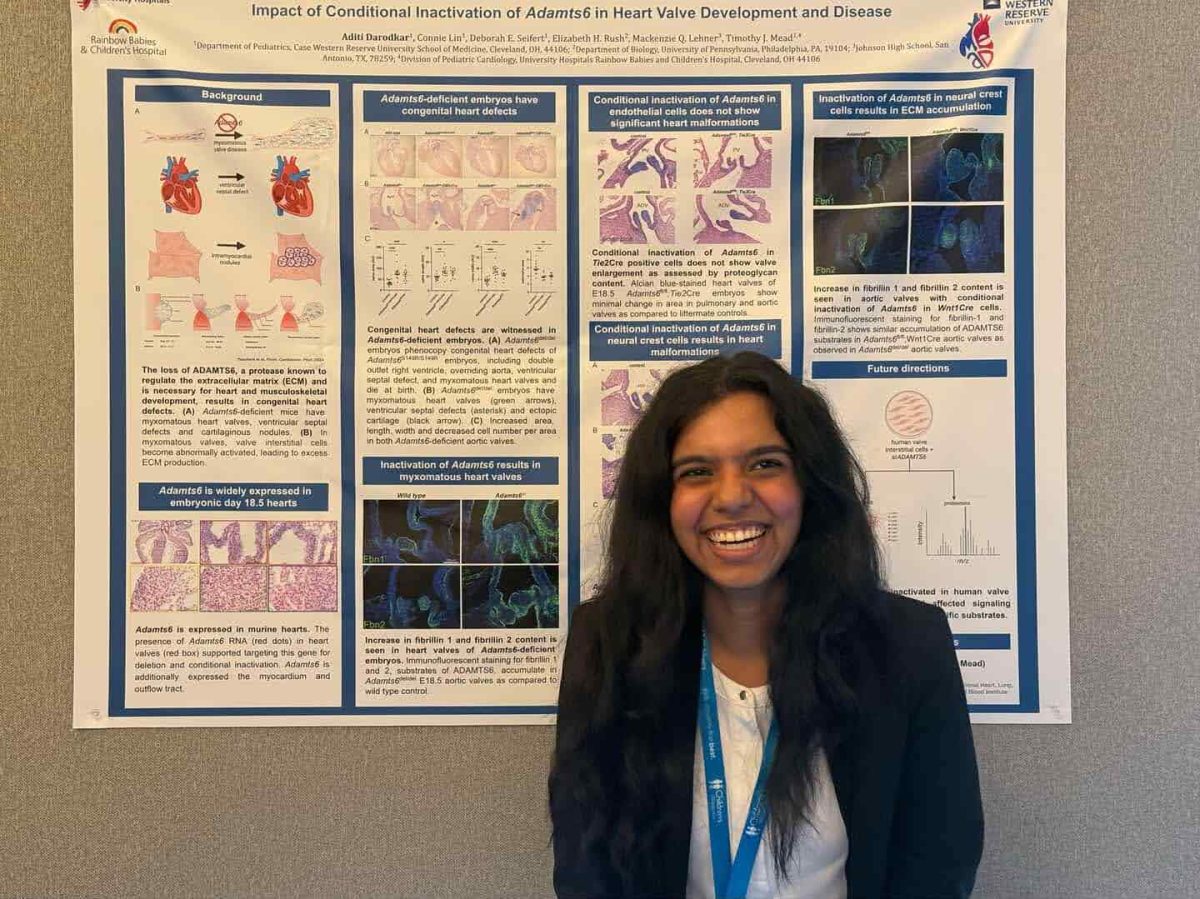
A path commonly defined by its high academic rigor, pre-med track places emphasis on students’ intellectual curiosity, critical thinking skills and more than anything else, their self-discipline. From serving as the former Academic Decathlon president and pursuing her love of art to building the foundation for a pre-med study track at Emerson, Aditi Darodkar is a Class of 2024 graduate and currently a sophomore at Case Western Reserve University.
Continuing her pursuit of the pre-med track from high school into college, Darodkar details her studies at CWRU and how her experience over the past two years has been.
“I attend Case Western Reserve University in Cleveland, Ohio. I’m a biochemistry major right now, and I’m thinking about minoring in journalism,” Darodkar said. “It depends on what specifically you are aspiring to do in the future, but it [has been] definitely intense.”
Beyond adapting to the newly demanding academic environment, she shares a keystone of her college experience that allowed her to stand where she is now.
“It’s all about accessibility, like how you actually use those resources, because some of the resources aren’t easily accessible. For example, [even though there are] three or four hospitals within walking distance of the campus, it’s still so difficult to find volunteering or shadowing,” Darodkar said. “So, you have to be really persistent with chasing after those resources and to keep looking out.”
Pre-med track is known for its intensity and often its unrealistically high expectations for the students. Luckily, for Darodkar, she has cultivated the skills from high school that serve as a backbone for college study.
“AcDec was super important to me, [because] it single-handedly has saved me from not failing my classes,” Darodkar said. “The way I studied for AcDec tests has been ingrained in me that I study almost all of my materials [in the same way].”
Despite all the new changes and major developments she has gone through, she still cherishes a sense of her inner child she still carries within.
“I was surprised at how much of a kid I still was,” Darodkar said. “Sometimes, all I really wanted was to get ice cream with my friends. All I really wanted to do was to talk to my parents. I think people view college as like the transformative change between teenager to adult. But, the truth is, at least for me, [that] it’s not immediate and more like [in] progress to becoming [an] adult.”

With a multitude of research, shadowing and high-level studies under her belt, she strives to acquire skills needed for her future pursuits.
“One of my future goals is to get into med school,” Darodkar said. “Right now, I am trying to focus on [maintaining] good grades … continue to shadow doctors [and] learn more about the profession. I’m trying to unlock more and more advanced levels for the different things that I’m doing.”
Darodkar offers her personalized piece of advice to those who are eager to pursue a pre-med track at college just like her.
“The advice I give comes from my own personal [experience] … after you adjust [within] the first couple of semesters, if you’re pre-med, it’s very important to be intentional with what you’re investing your time in,” Darodkar said. “It’s totally okay if what you decide to invest your time in doesn’t work out in the beginning, but then again, the quicker you get out of that, [the] better.”
Besides being strategic in pre-med studies, Darodkar brings attention to the power of collaboration and supporting your peers.
“I would say in general, not gatekeeping is the way to go,” Darodkar said. “I’m not saying [that] if you find an opportunity, [you should] proclaim it to the whole world, but what I am saying is that if you find an opportunity, and you know that one of your friends would also really appreciate that, then [share it]. These are the people who are going to remember what you did for them and then reciprocate that.”