
It’s often said that food is the way to the heart, and in many cultures a home-cooked meal is certainly the ultimate act of love. Food has always seemed a broad category to describe the various edible options out there, made up of thousands of ingredients whose purposes are both familiar and unknown. Flavors, textures and spices are encapsulated in each bite and blended together to create a culinary experience of the chefs’ design. Yet despite the world of possibilities, we often live in our own cultural bubbles, accidentally remaining enclosed by our norms and missing out on new dining experiences and traditions. This is why I made it my mission to find two different restaurants with authentic cuisines I hadn’t tried before, and immerse myself in the culture through the best possible way: food. To learn about each country’s environments through their common ingredients, their cultures through the spices and their hearts through their plates.
Having been to the Caribbean and Europe, I’ve been incredibly lucky to travel to many incredible places in the world and experience their cuisines. I wanted to choose an area of the world I hadn’t been to so I picked South America. Arepas by Perla popped up on the list of South American restaurants, conveniently located five minutes away from my house and ten from Emerson. An authentic Venezuelan restaurant, it boasts a 4.5 star review on Google Maps and a 3.9 on Yelp.
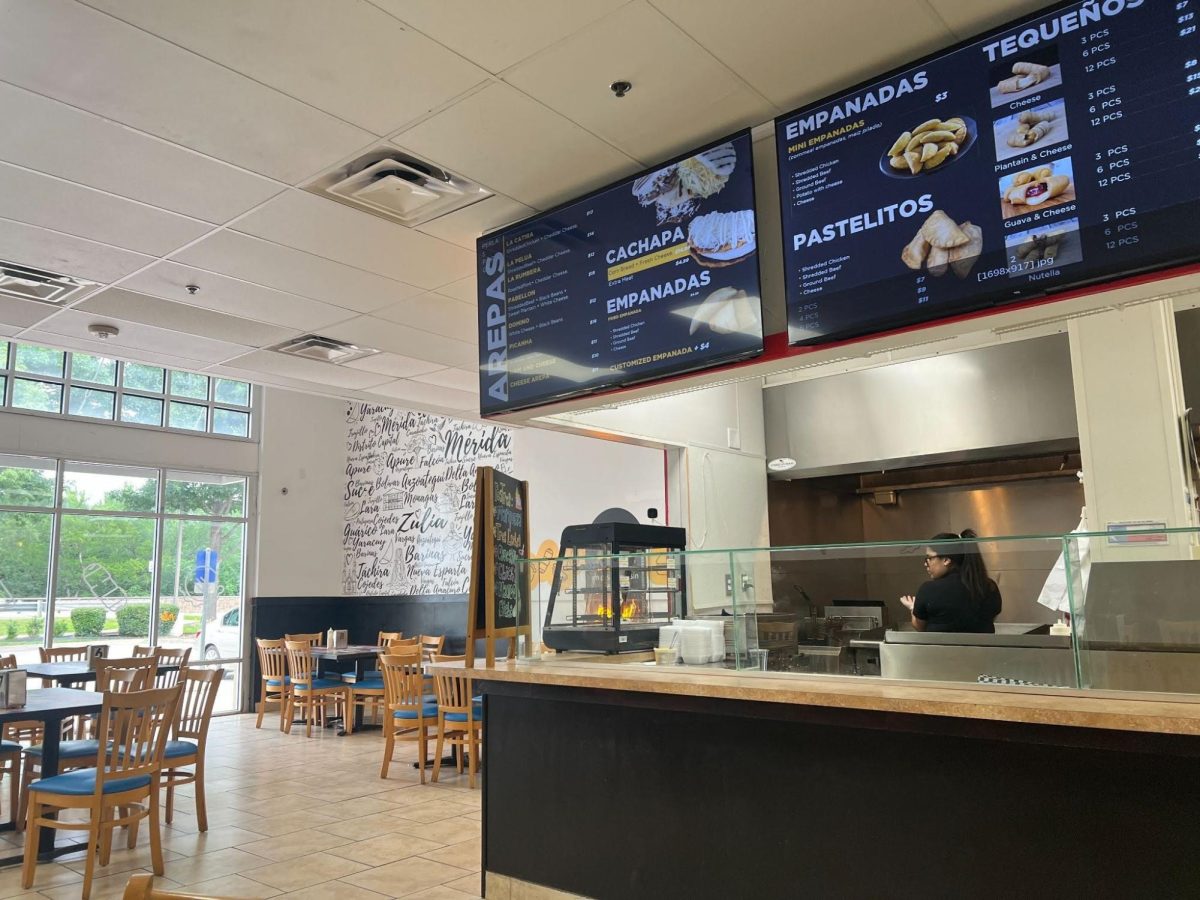
I expected a savory aroma to wash over me as soon as I opened the door, but the restaurant surprisingly didn’t smell like anything until the food came out. The interior was thoughtfully decorated, with tables depicting landmarks such as the General Rafael Urdaneta Bridge next to blue padded seats that provided pops of color contrasting the wooden frames and tilted floors. A wall was covered in the names of municipalities of Venezuela written in a scripted cursive along with symbols of Venezuela, including dancers, avocados and cathedrals. “Hi. Quieres una arepita?” was written on the wall above the stainless steel counter. The wall opposite to the counter had Venezuelan words written across, which I later found out were slang words, and another featured common foods and ingredients found in the types of food they offered, such as pastelitos, which could be made of shredded chicken, shredded beef, ground beef or cheese. This was all tied together by bright accents of red and yellow, making the restaurant atmosphere industrial and light.
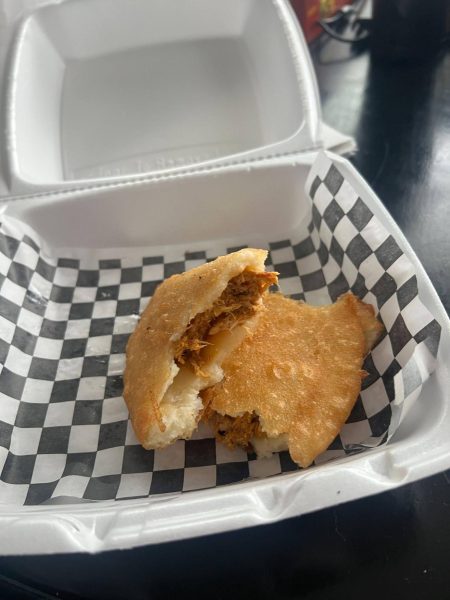
The menu consisted of arepas, empanadas, cachapas, pastelitos, family meals, plates, pepitos, and surprisingly burgers and hot dogs, though they looked slightly different. Although the restaurant was named after arepas, the chef told me the empanadas were her favorite, so I decided to try the shredded chicken empanada. There was only one couple in the restaurant who ordered before me and only one chef, so the food took around seven minutes to come out. The empanada arrived piping hot so after waiting a couple of minutes I dug in. The inside filling of shredded chicken was pretty good, although there wasn’t as much flavor as I would’ve expected. It was vaguely reminiscent of a tomato base with taco seasoning and chili powder. The thick shell was perfectly crunchy on the outside and soft on the inside, but it desperately needed seasoning. It was bland and decent with the filling but not appetizing by itself. According to reviews, there were supposedly delicious sauces that provided additional flavor, but they didn’t come with my empanada and I didn’t see them on the menu.
Overall the restaurant was decent. If I were to go back I would try something different and ask for the sauces. While the decor showcased their cultural ties to Venezuela in a really cool way, the food I had wasn’t anything special.
(Ardyn Lessner)
For the second part of my review, I decided to do a restaurant featuring African food. The large pink and purple logo advertising Mabel’s African Cuisine and Bar has always drawn my eye, so I thought I’d give it a try.
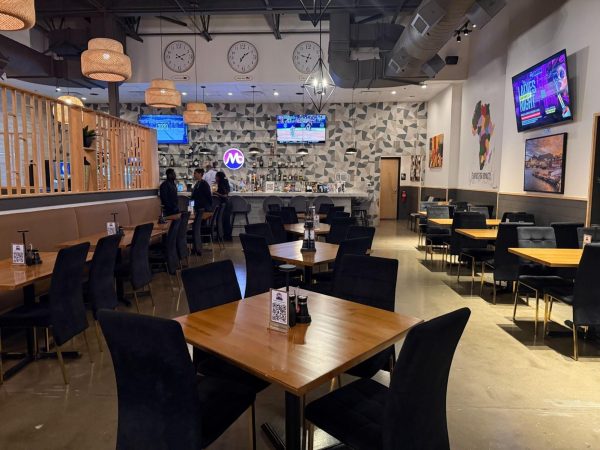
The atmosphere of the restaurant was relaxed and moody, with gray leather booths separated from the tables by a wooden railing. The ceiling was unexposed, revealing metal beams and pipes. A large mural was painted on the wall, depicting a yellow taxi, smiling woman cooking, a Nigerian flag, the silhouette of a trumpet player and a large bridge over a lake. The bar was at the back of the restaurant surrounded by geometric wallpaper and alit from the natural light flooding in the large windows. At the front of the restaurant a leafy green photo backdrop was set up, complete with LED neon signs. A second mural depicted the continent of Africa with each country in a different color above the words “Flavors for royalty.” Finally, three minimalistic clocks above the bar caught my eye, each displaying different times.
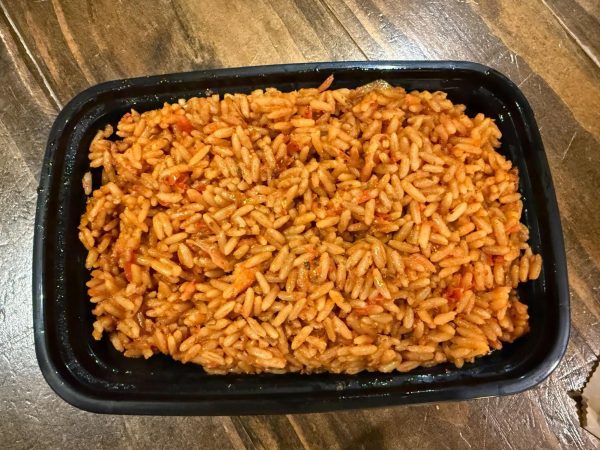
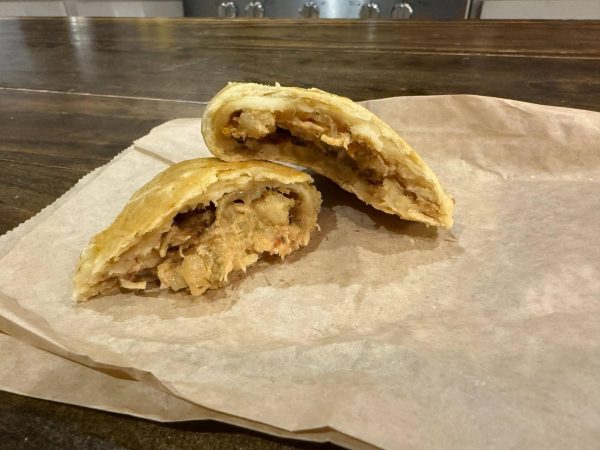
I was most excited for the food. Judging from pictures online, the meals looked hearty and well-cooked. The menu was separated into appetizers, entrees, sides, kids, a daily culinary special, and normal beverages. Ingredients like rice, plantains, fish and various types of meat were incorporated into multiple dishes. I ordered one side of jollof rice and a chicken meat cake so I could compare it to the other restaurant. The food came out quickly in about 10 minutes. Even though the rice was just a side, it came in a large container that could easily fill up to six people. It had a tomato base and was excellently spiced, with hints of onion and paprika. The chicken hand pie definitely outranked the other one, despite having distinct differences. The shell was buttery and soft, and the chicken on the inside was delicious. It tasted vaguely like chicken broth and it contained some carrots and potatoes.
Overall, I would definitely recommend this restaurant and would love to come back to try the other entrees and sides. The food comes in large portions, so expect leftovers or bring friends! Getting to try new cuisines was an amazing experience that I’ll have to continue.