

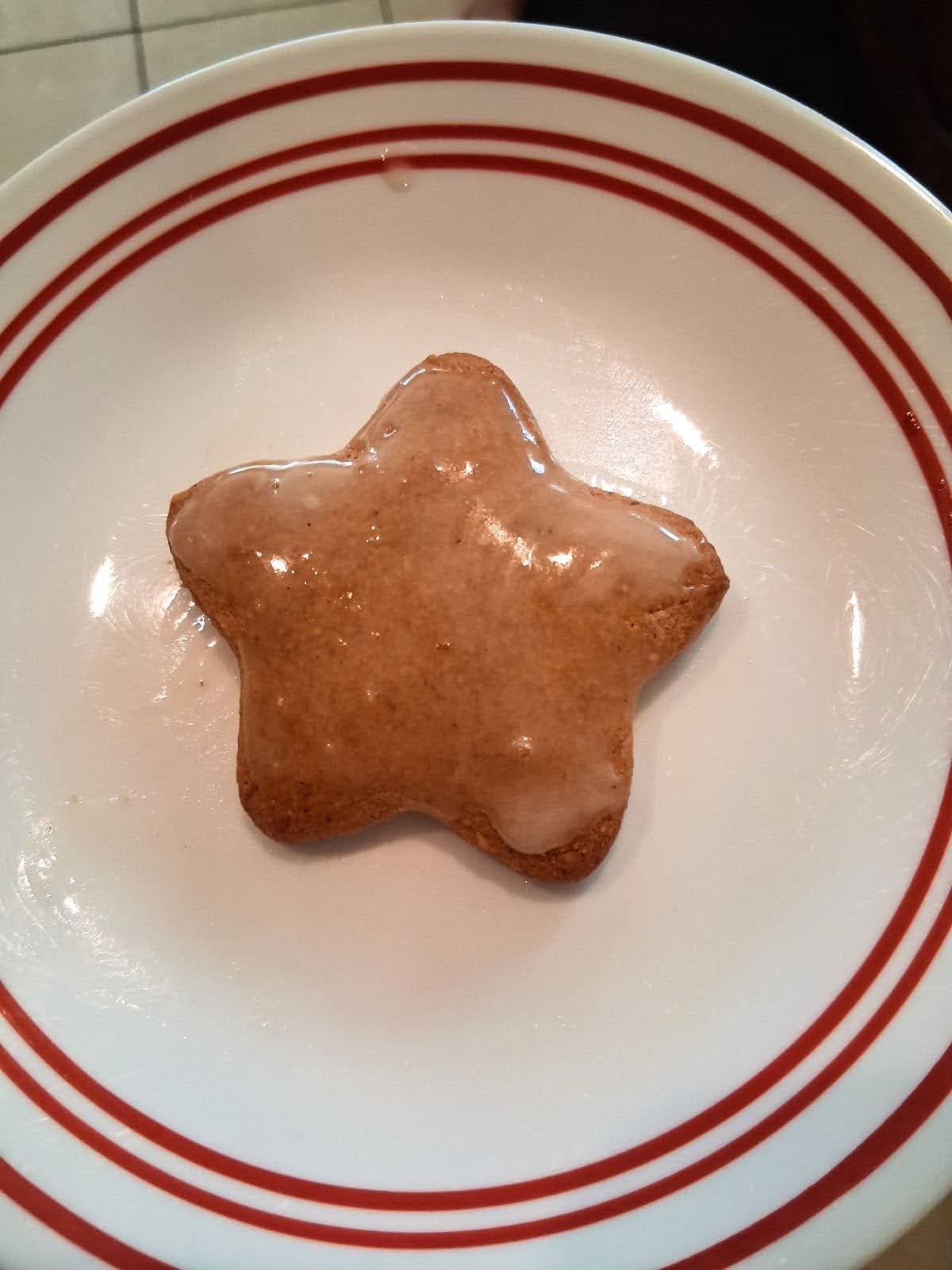
Lebkuchen are German gingerbread cookies that are baked in celebration of Christmas
The first dessert I made was German Christmas cookies called Lebkuchen. Aside from the cookie dough getting a little sticky while I was cutting out the star shapes, the recipe was very simple. I prefer a soft, chewy cookie, however, the Lebkuchen turned out crispier like a gingersnap. Despite this, I still ended up enjoying them, and they were well liked among my family friends. The Lebkuchen had a few distinct flavors: ginger, cinnamon and a hint of citrus. Ginger and cinnamon are pretty common flavors in the U.S. that are also associated with colder weather, but the German’s addition of lemon and orange for the citrus surprised me. All in all, these cookies were pretty similar ones you might here in the states, but the citrus was a nice touch that made these a little more unique.
Click here for the recipe!
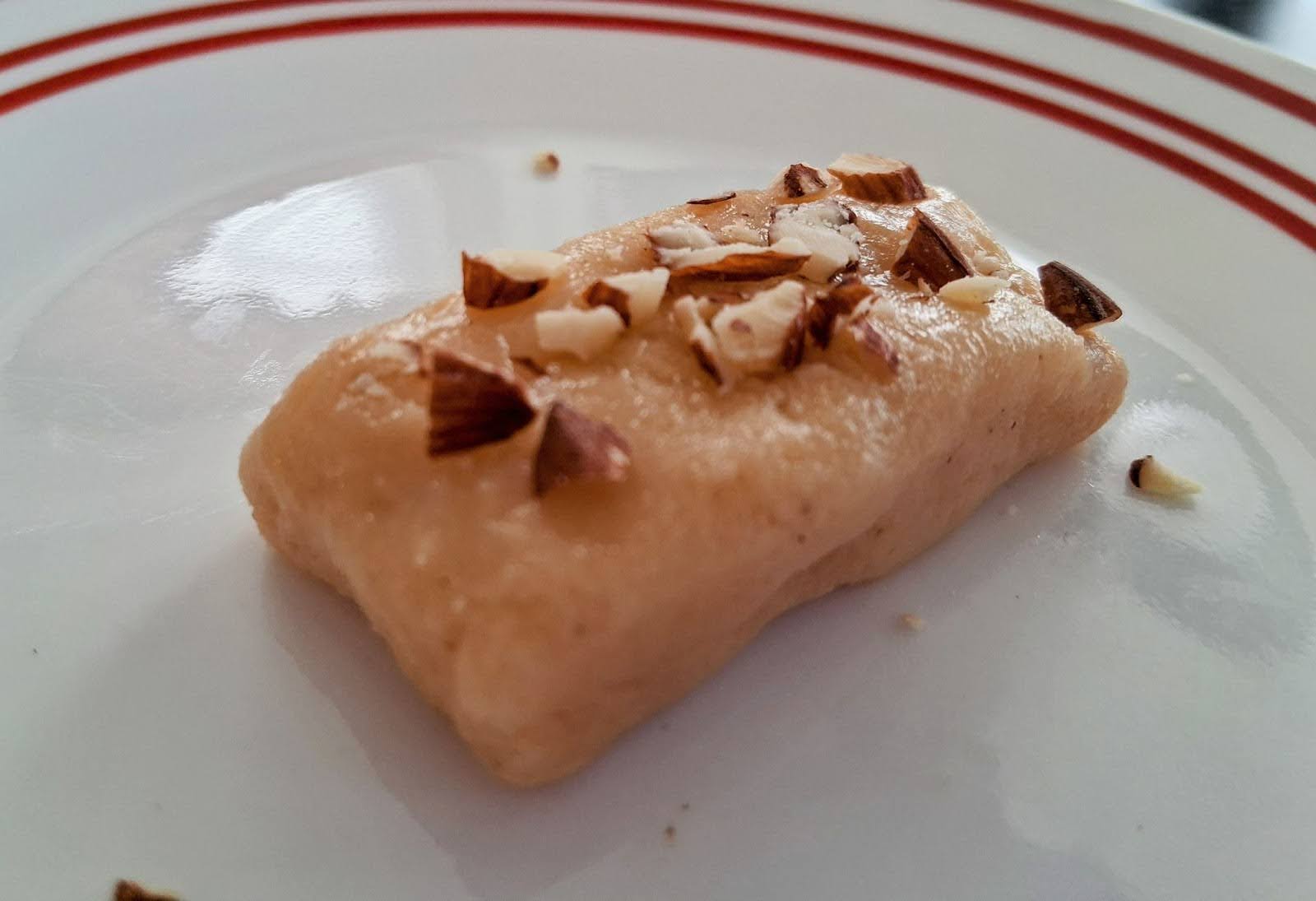
Milk barfi is a popular Indian dessert made during holidays such as Diwali.
Next, I made an Indian dessert called milk barfi that is commonly served during Diwali. It took nearly 30 minutes, but the cooking process for this was very simple. I combined all the ingredients in a pot and kept stirring on low heat until the mixture became thicker. I then poured the dessert into a pan and let it cool for the rest of the afternoon. I feel like the pan I used may have been too big because I ended up with much thinner pieces of milk barfi than what the recipe showed, however, it was still delicious. Milk barfi is definitely quite different from American desserts, so many of my friends and family members were a little nervous to try it. In the end, the majority of them really enjoyed its sweet creaminess with a chewy texture, and they begged me to bring them more. Not only is the texture and appearance of this dessert much different from American treats, but the dash of cardamom added a flavor that was unfamiliar to some of my friends. Overall, milk barfi is a very unique dessert, but definitely worth trying!
Click here for the recipe!
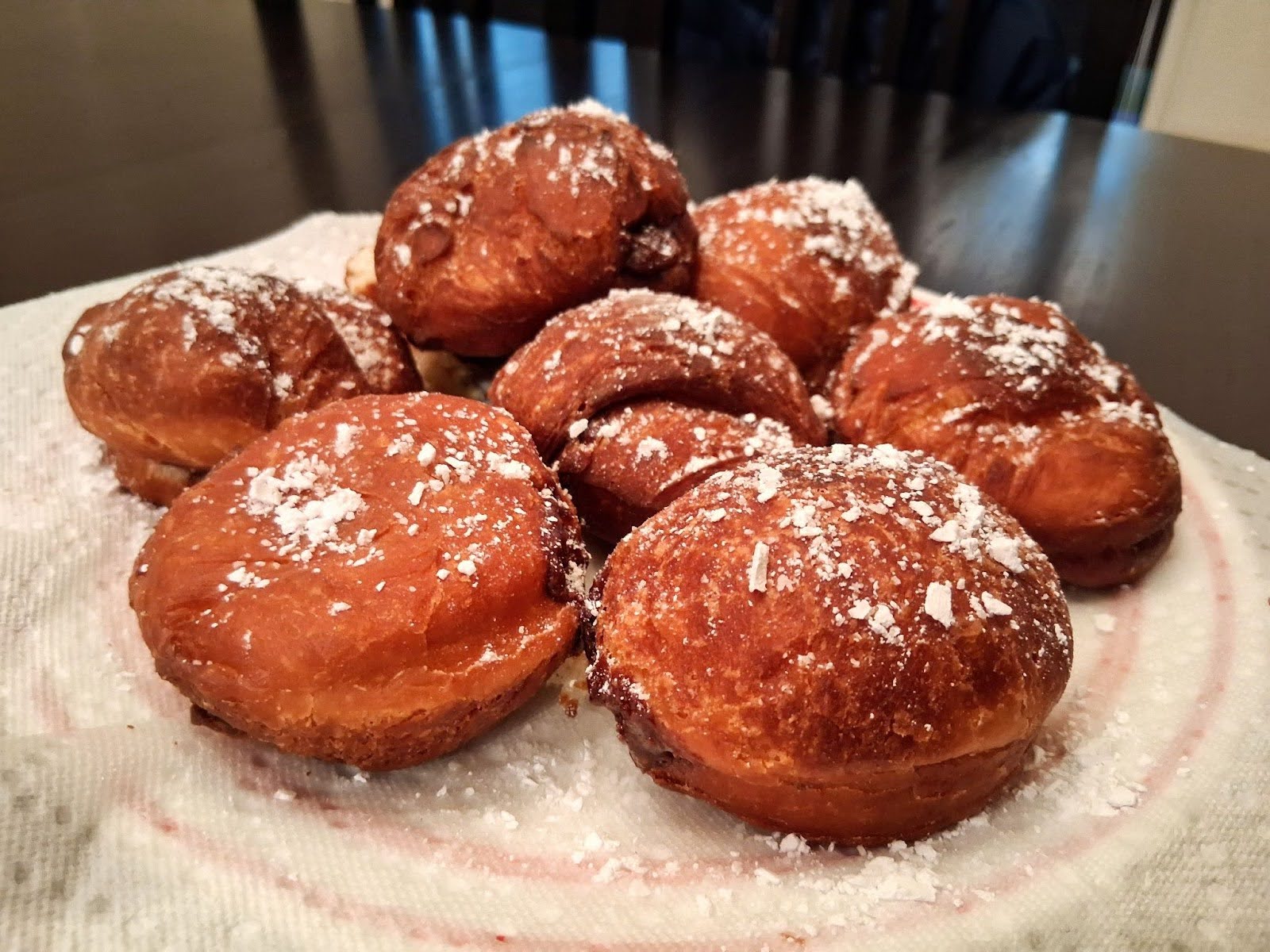
For Hanukkah I made Sufganiyot, a popular treat served during the holiday. This dessert was probably my favorite, but also the most challenging. While the recipe itself was not actually difficult, I ran into a few challenges. First, the recipe said to let the dough sit for at least thirty minutes, however, mine took a little over an hour before it had noticeably risen. Everything ended up fine with the extra time that I gave it, but it made me nervous when I came to check on it at the 30 minute mark and it didn’t look like much had changed. My second issue came with the frying. The recipe was very with its instructions for how hot the oil should be, so as someone who has very little experience with frying, this took some trial and error. The oil was much too hot for the first bit of dough that I tried to fry. Unfortunately, this meant that the sufganiyot ended up burnt on the outside, raw on the inside and my house got a little smokey. I turned the stove temperature way down, and finally got the right temperature after three more failed attempts. Luckily for me, the dough made a lot, so I still ended up with plenty of the dessert. Finally, Sufganiyot are usually filled with jam, however, it is also common to fill it with chocolate or nutella. I’m not a fan of jam, so I made some nutella before starting the recipe. Since I don’t have a proper piping bag, the Sufganiyot were a little hard to fill, but I was able to make do with a cut corner on a plastic bag. As far as taste goes, I enjoyed this dessert the most. When the dough is placed in the oil at the proper temperature, it puffs up, making the finished treat light and fluffy. I loved the texture as well as the nutella filling, and I appreciated how it was sweet but not overwhelmingly so. This dessert was also popular among my family and friends. While I’m not exactly sure which American dessert might be the most comparable to this, it tasted like something that one might find at a nearby bakery.
Click here for the recipe!
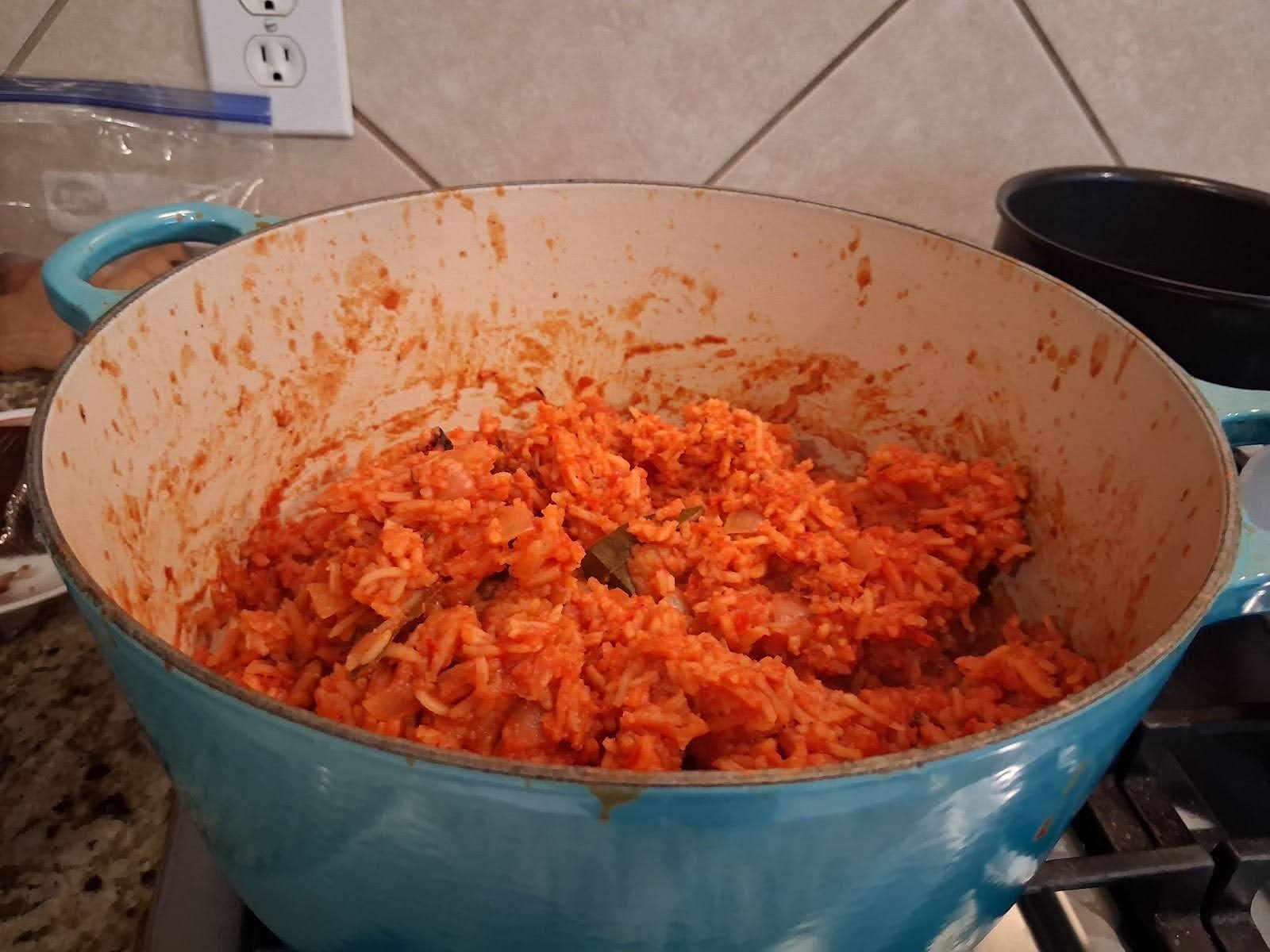
The final dish that I made was jollof rice. This is a popular African dish served during Kwanzaa. The dish itself was easy to make but a little time consuming. For this recipe, rice is cooked in a blended tomato, red pepper and onion sauce with chicken broth, making the dish very flavorful. Since the majority of the recipe involves just letting the rice cook, it was not very difficult or high effort, but it did take more time than some of the other recipes. As far as the taste goes, it’s not like any other rice dish I’ve had before or that is commonly served in American cuisine. While some of my family felt as if the tomato and red pepper taste was a little too strong, the rest of my family and I really enjoyed it.
Click here for the recipe!