
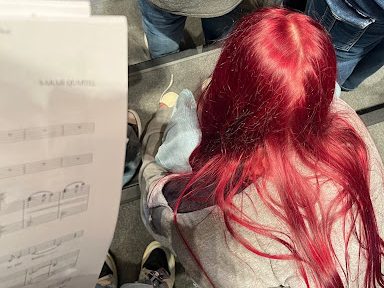
October of my junior year I had an itch: I needed red hair. As my eyeliner got thicker, I thought that my long blonde hair didn’t quite suit me anymore. I had red hair for just over a year and made a lot of mistakes along the way: Stained cabinets, damaged hair, wrong dye and bad lightening attempts. I really only had YouTube and TikTok to help me, but everything got easier as I got more experience. Dyeing your hair in your bathroom while your parents are sleeping is a teenage rite of passage, but it’s best to not go in completely blind. If you want to scratch this itch without making the myriad of mistakes I did, use my story as a guide to get a better grasp on how to successfully achieve your new, true look!
The first time I dyed my hair at home, I turned my whole head purple, even though I only meant to dye the underside. Being a natural blonde, I didn’t understand how quickly direct dye transfers color to light bases. Direct dye is a cream based dye that only physically deposits color to the hair through temporarily staining the strands and causes no damage to your hair. With this kind of dye, it really matters what hair color you are starting off with. The next time that I used direct dye was my junior year when I decided that I needed red hair. I went to Sally Beauty and picked up two bottles of red dye, one from Manic Panic and one from Arctic Fox; in the bottle, both of these red colors looked like a dark cherry, which is what I was going for. However, since my hair was very light and porous due to the highlights I had gotten in the past, it absorbed the red dye quickly and the color came out very bright. This, of course, is not what I wanted, so I went back to the drawing board.
As I took a longer look at Sally Beauty online, I tried finding a darker or more natural looking red. This is when I discovered that most cheap or accessible direct dyes were fashion colors, which is just a fancy cosmetology word for unnatural colors. I decided on a darker reactive dye to get the color that I wanted. Reactive dye needs a developer to work on your hair properly and undergoes a chemical reaction to deposit color, which chemically changes your hair and is demi-permanent or permanent. This can damage your hair depending on the level of developer you use and the time you let the color process on your hair. This is where you learn from my mistakes: I didn’t want to buy a developer because I was cheap and ignorant of the differences in hair dyes and when my hair barely changed after applying the new dye, I was shocked but accepted defeat.
After about a month it was time for a refresh. This wasn’t just because my blonde roots made me look like I was balding, but because of the chemistry behind red dye. The molecule that makes up the red color is quite large, which allows the color to latch on really quickly, but also forces the hair dye to fall out of the hair easily. If you want red hair but don’t want to refresh the color every couple of weeks, it is very important to wash your hair with cold water to help retain the color. I, on the other hand, found the process of hair dyeing quite therapeutic and didn’t mind a bi-weekly refresh.
Even though I wanted to refresh my hair often, I was still balling on a budget. This is when I discovered the fantastical world of box dye. Box dye is a good and accessible resource for fun hair, and the options are just about endless. But a lot of the marketing is misleading; every single box comes with a developer, therefore it chemically changes your hair. The majority of box dyes have a label that says something along the lines of “nourishing” or “rejuvenating,” but only the conditioner that’s in the box will make your hair feel refreshed or moisturized, not the dye itself. The dye will probably eventually damage your hair depending on how often you use it, and it’s important to be wary of this, especially since the box isn’t marketed as a reactive dye.

Around summertime, I wanted more of a light, natural red. Did I have the resources to do this? Absolutely not. Did I make bad choices concerning my methods of lightening my hair? Absolutely. “Peroxide blonde” is a pretty common phrase used to characterize very light blonde hair. I took this and ran, grabbing the nearest bottle of hydrogen peroxide and a box of baking soda and lathering it on my processed hair. Do not do this. My hair barely lightened, but it felt weirdly grainy for my next couple of washes. I highly recommend going to a professional hair stylist if you plan on going lighter. Although both reactive dyes and lighteners process the hair, bleach breaks down the pigment in your hair while developer only opens the cuticle, making lightener far more damaging.
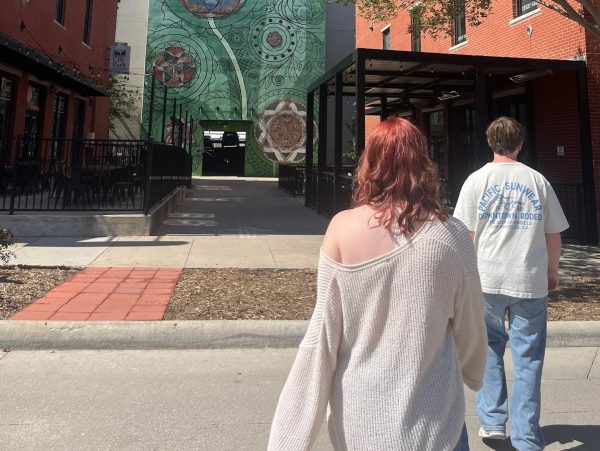
After a little over a year of having red hair, I got bored again. My personal style had changed along with parts of my life. I loved my red hair but, even though I would never tell my parents this, it really was just a phase. When I went into the new year, my graduation year, I wanted something new (I also was just kind of getting sick of my roots growing in terribly). I decided to go back to my roots and slowly inch back into the world of blonde. This was outside of my skill level, so I made an appointment; you should always go to a professional for bleaching your hair. Now, I have fun strawberry blonde hair with minimal damage.
When I decided to go back to my blonde roots, my parents got all pouty and believed that all of the time, money and effort that I put into dyeing my hair had been for naught. I couldn’t disagree with this more; when I think about the life that I lived when I had red hair, I can’t imagine that version of myself looking any differently than I did. I grew and changed as a person, and my hair changed with me. That phase of my life was integral in figuring out who I am and what I’m not, and now I’m basically a skilled cosmetologist!