
The Lunar New Year, used interchangeably with Chinese New Year, is one of the most important holidays in Asian culture, signifying the start of the first new moon in the lunar calendar. Sometimes known as Spring Festival in China, Seollal in South Korea and Tết in Vietnam, it’s a major 15-day celebration that commemorates the arrival of spring. It’s a time for families to honor ancestors, spend time together and participate in beloved traditions.
The new year began on Feb. 17, and is represented by the Fire Horse. The Chinese Zodiac is a cycle of 12 years, with each one symbolized by the characteristics of a different animal: the rat, ox, tiger, rabbit, dragon, snake, horse, sheep, monkey, rooster, dog and pig. The animal that corresponds to the year a person is born is their zodiac sign, different from the astrological ones that represent each month. 2026 aligns with the fire element Bing, which happens every 60 years, giving us the Fire Horse. It’s said to represent energy and independence, perfect for anyone wanting to transform their life.
Lunar New Year traditions can vary from household to household, but there are a few common ones that are widespread.
- Red envelopes
The color red generally represents wealth and prosperity for the coming year, and red envelopes literally embody that. Filled with money, they’re often given from elders to young children, married couples to unmarried people, bosses to employees and exchanged between friends. The traditions run even deeper than expected, down to the number on the dollar bill. Odd numbers are associated with funerals, so even numbers are preferred. The envelopes help to bring luck, happiness and protection from evil spirits, and are an important aspect of the holiday.
- Altars
Families often set up elaborate, decorated altars to honor ancestors and deities. Burning food and incense are used to show respect to loved ones, and prayer is a ceremonial custom, although less common nowadays. Families traditionally visit relatives such as grandparents. In general, paying your respects to the spiritual and the dead is an extremely important aspect of the Lunar New Year.
- Food
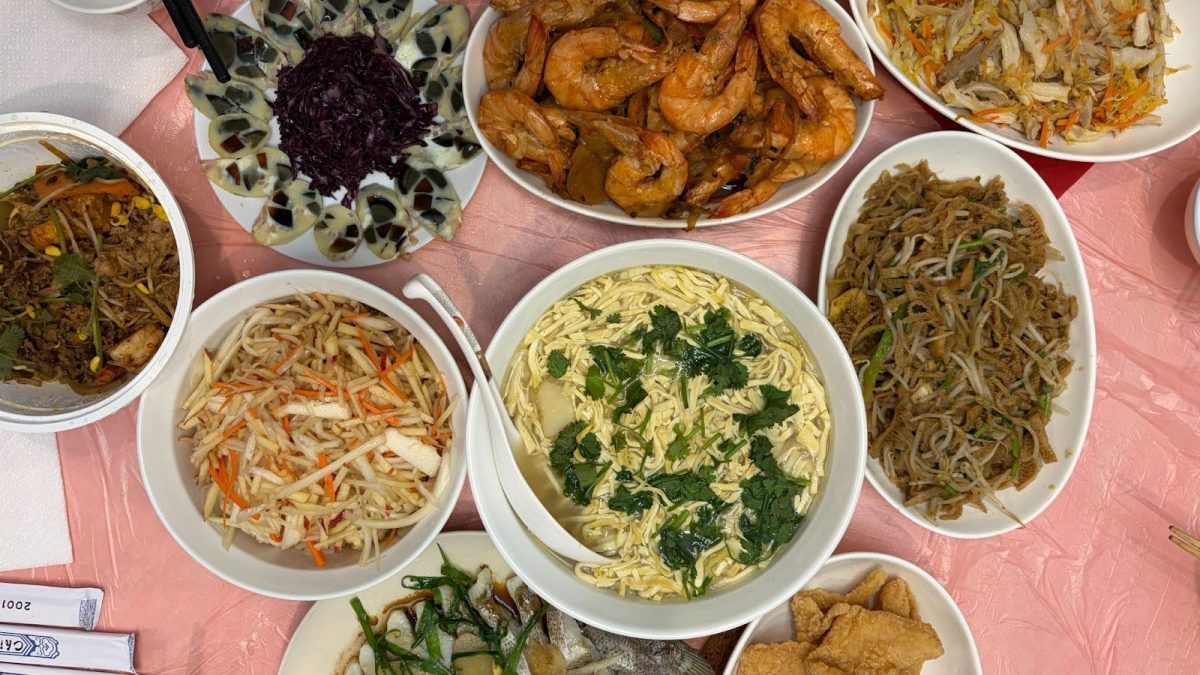
Feasts practically make up half of the activities on Lunar New Year and act as a central part of the holiday. Food is seen as the foundation for celebrations, which can be seen through the large “Reunion” dinner held on New Year’s Eve. It often has symbolic meanings, like whole fish representing a surplus of wealth, long noodles symbolizing long life, Nian Gao (sticky rice) embodying growth and citrus fruits signifying good fortune.
- Parades
Parades are elaborate, city-wide festivities bursting with light and color. Performers like lion and dragon dancers proceed through the streets beside elaborate floats shooting fireworks and firecrackers. Paper lanterns, along with fireworks and the color red, are abundantly strung up to ward off the mythical beast Nian. The celebration not only provides entertainment, but serves as a cultural heart that fosters community and connection among people with a shared heritage.
Lunar New Year also has different meanings for different regions in Asia. Vietnam’s Tết celebrates the peach blossoms and kumquat trees while emphasizing family reunions. In South Korea, Seollal focuses on memorial services for ancestors and eating tteokguk, a rice cake soup said to grant people another year of life.
Regardless of which area of the world or which traditions are upheld, Lunar New Year remains a central part of life around the world. Whether people participate in full-fledged celebrations or simply wonder what the Fire Horse has in store for them, Lunar New Year acts as a guide for anyone wanting to make memories this year.