

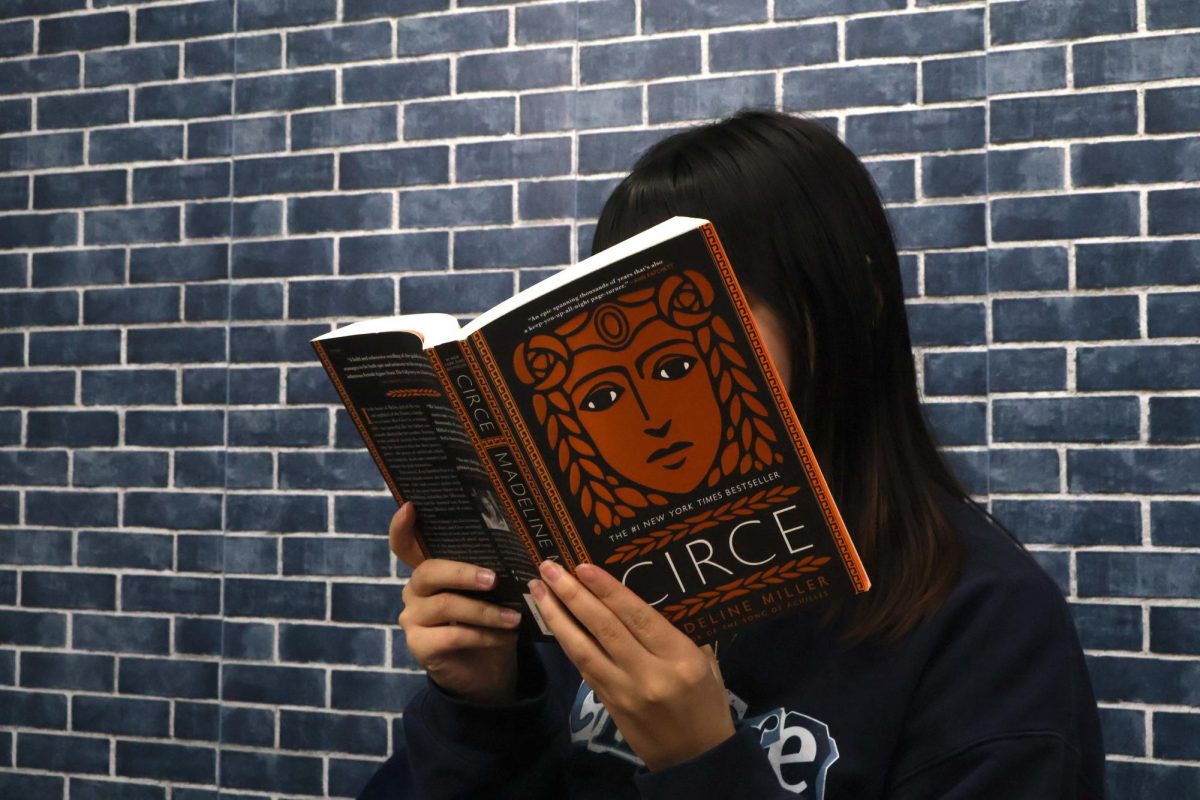
Reshaping a tale from Homer’s classic “The Odyssey,” Madeline Miller’s bestselling novel “Circe” was published April 18, 2018. Taking place in Ancient Greece, it follows the life of Circe, the misunderstood daughter of the god Helios. While being born into a bold, powerful and borderline narcissistic family, Circe is quieter and mocked by her younger twin siblings, but finds solace in moments with her youngest brother. After centuries of appearing powerless, Circe discovers she has a rare gift: the power of transformations. It’s revealed that all her siblings have the skill of sorcery, which makes Zeus suspicious of their intentions and nervous about his reign in Olympus. Without cunning lies of the powers like her siblings, he declared that Circe was banished to the island of Aiaia for eternity, where her life surprisingly changed for the better. “Circe” is a must-read for fans of adventure and fantasy, with its beautiful themes of identity, acceptance and feminism.
A defining and greatly appealing aspect of the novel is how it explores identity. For dozens of generations, Circe is deemed too soft, powerless and “mortal-like” by her family, fueling this idea of her “otherness.” The first line enforces this belief, as Miller wrote: “When I was born, the name for what I was did not exist.” Immediately, this establishes Circe as a unique individual, unable to fit into any categories that would satisfy her fellow immortals. As a result, Circe forged her strength and identity through her experiences and pain, not because of her divine lineage. At Aiaia, punishment morphs into liberation. Away from judging immortal eyes, Circe refines her witchcraft by cultivating herbs, transforming creatures and studying stells. This solitude showed Circe that no one, not even her family, could dictate her identity: only she could. From insecurity to confidence, Aiaia shifted her perspective on who she was, which is a powerful message to any reader.
A factor that ties in with identity is another significant theme of the novel: self-acceptance. From the moment she’s born, Circe craves acceptance through validation from her father, peers and lovers, allowing that to define her personal worth. Similar to before, the banishment to Aiaia shifts her away from that dependency. Additionally, Circe learns that with acceptance comes vulnerability, especially as she builds relationships with mortals throughout the novel. Through this, she embraces imperfection and no longer needs the approval of any gods to affirm her worthiness.
One of the most viral parts of the novel is its feminist perspective. Miller reclaims Circe’s classic figure as a villain and shapes her into a genuine person with depth. In versions of her tale, Circe is acknowledged only as an evil witch who turns men into pigs. Miller’s version shifts her reasoning for doing so from a form of cruelty to a response to violence she experienced at their hands. Circe defends herself in a world where men violate women, both divine and mortal, giving a voice to the usually silenced women in myth. While her arc is not overtly rebellious, it’s rooted in her autonomy, as Circe stands up to the patriarchal figures in her life and defies the manipulative male power in Olympus. However, while this is one of the most inspiring aspects of the novel, it’s also the most critiqued. Critics argue it isn’t truly feminist, since parts of Circe’s story revolve heavily around the male relationships in her life. Despite this perspective, “Circe” shows how male power structures shape women’s lives, but that doesn’t mean these systems have to define them.
Overall, Miller’s “Circe” is a story that truly embodies transformation as it transforms myth into a deeper narrative, exile into empowerment and forced isolation into strength. Through its major themes of identity, acceptance and feminism, Miller created a version of Circe who wasn’t a wicked witch nor a wonderful woman but something else: a woman who defined her own story.