
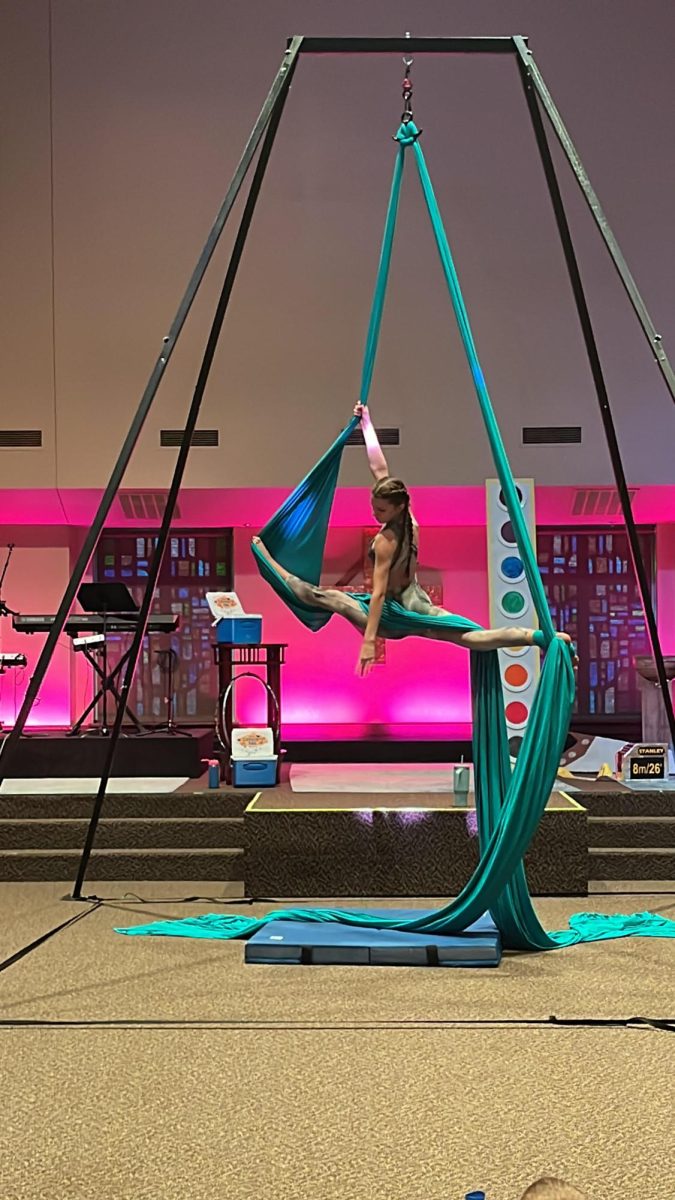
If you’ve ever seen an aerial circus performance, you know how breathtaking it is. From graceful tricks to jaw-dropping flips, it’s nothing short of awe-inspiring. While aerialists make it look easy while stranded ten feet in the air, there’s a lot of components that go into creating a routine.
Disclaimer: Aerial circus is a dangerous activity and should only be practiced with proper coaches and mats.
- Apparatus:
The most important part of the act is the apparatus! They’re what you’ll be extensively practicing and performing on, so choose one that you feel comfortable on in front of an audience. Safety is the number one priority, so make sure you have enough experience or professionals nearby before trying out new things. Apparatuses range from soft ones like silks and sling/hammock to hard, metal lyras/hoops and trapezes, and each requires its own tricks and types of skills required.. Other more uncommon ones include ropes, poles, spirals, straps, cubes and shaped lyras such as hearts and moons. - Theme:
If the performance is a part of an overall circus show, chances are it has to fit the theme. Whether fantasy, vintage, futuristic or something more specific, the whole vibe that the routine emits has to comply. Many things can affect the theme, including music choice, costume and lighting. - Music:
The music selection plays a large part in how the message of the show is conveyed. The song will determine the melody, beats, timing and subject of the performance. It’s important to choose a song based on how you want your routine to feel. If it’s fast, pick an uptempo song, whereas if it’s slower and more controlled, a song that reflects that. Additionally, the length of the music determines how much time you’ll be in the air. If you don’t have a lot of stamina, choosing a shorter song or cutting a longer one will work in your favor. - Tricks:
Every routine is made up of tricks strung together by transitions. Sometimes tricks work as transitions for each other, while other times climbing and rewrapping is necessary. It’s always best to first pick a few key ones that you know you for sure want to include so you can start forming the act around them. - Transitions:
Once you’ve chosen a couple of tricks, start looking for ways to smoothly move between them. That involves rearranging the order of the tricks and brainstorming other ones with similar entrances, exits and wrapping. Fluid transitions will allow you to continuously perform instead of doing one trick, undoing it, going into the next one, undoing it, and so on. Routines must be carefully structured to ensure the audience is never bored and acrobats are always performing. - Timing:
Matching the tricks and transitions up to the music is a critical part of any successful performance that’s often overlooked. It’s common for aerialists to have ultimate flexibility and amazing tricks that are rushed or too slow. There will even be a sudden build up or change in the music and the acrobat will just stay in the same pose. This is boring and inconsistent, so carefully plan out where each trick will begin and end. If the music between each skill is too long or short, adjust the transitions in between accordingly, and if there’s a dramatic shift in the song, plan a drop or elaborate spin. - Practice:
In order to prevent as many mistakes being made as possible, it’s important to practice until the moves are muscle memory. You’ll then be able to focus on the style and facial expressions, which will complete the routine and tie it all together. Run it over and over in front of an audience so you can get over any stage fight and get used to projecting emotions. - Performance:
Performing your routine is the grand finale that showcases all of your hard work. It’s the cherry on top that allows loved ones to see your talent and athleticism. Make sure to have fun and not stress over the imperfections, as aerial circus is an activity that’s meant to be enjoyed. You’re always welcome to rewatch videos and try to fix the errors, but don’t pressure yourself to be perfect!
Aspiring aerialists who want to create their own routines should follow these steps and just go for it! With the proper training, strengthening, stretching and classes, anyone can twirl, spin and soar into the air!