
My first impression of “Wuthering Heights” was the Kate Bush song adaptation; it’s safe to say I was thoroughly disappointed.
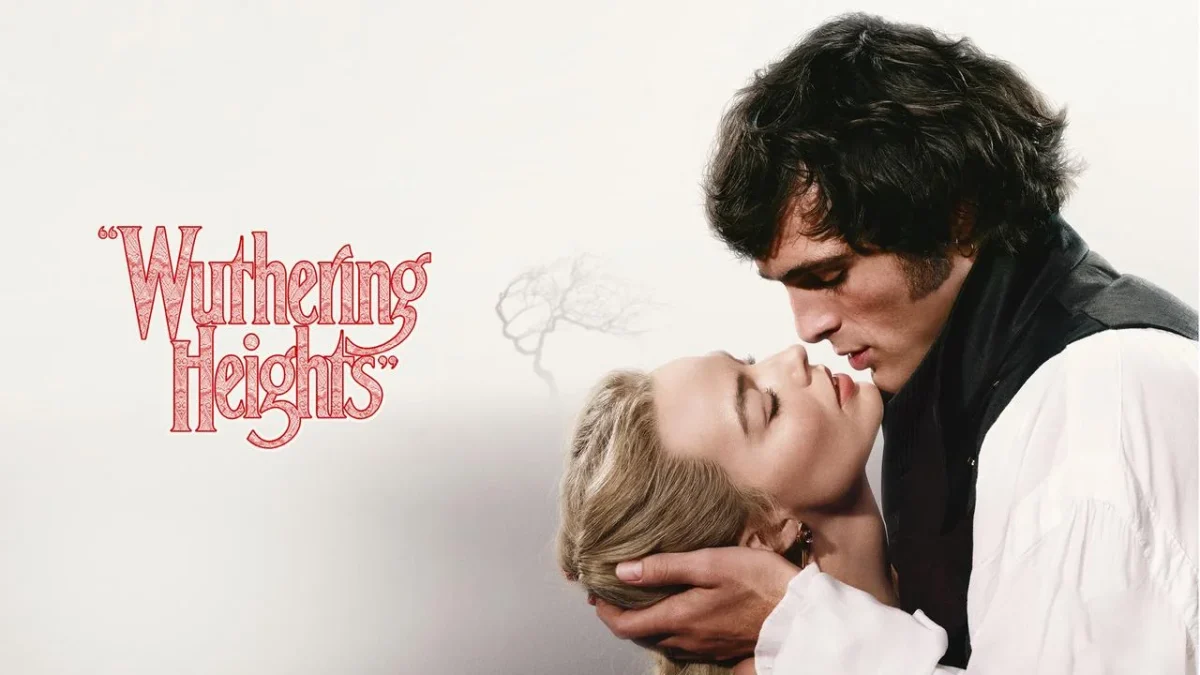
This past semester, I had the chance to read the notorious Gothic-romantic novel “Wuthering Heights” by Emily Brontë. I had heard the title a few times and was really excited to get to read the book. However, I think what made the experience more special is that Emerald Fennell’s movie adaptation was set to release shortly after I had finished the book. The film had already gained significant traction through its media promotions featuring celebrity actors such as Jacob Elordi and Margot Robbie. Similarly to Kate Bush’s song … I was still thoroughly disappointed. The book and its original text supersede any subsequent homages, but here are three specific reasons why.
Emerald Fennell’s film is not a film adaptation of “Wuthering Heights”. In an interview with the press, Fennell was asked why the movie’s title was in quotation marks. Fennell goes on to explain that the film is essentially a fan fiction of the original novel: instead of being told from Nelly Dean’s perspective, it is largely based on how Fennell perceived the book. Many audience members, including myself, didn’t realize how far the film would stray from its original source material, nor that it would exclude important minor characters such as Nelly, Hindley and Lockwood.
The film is rated R. Contrary to my predictions, the book itself had zero explicit chapters. The novel explores the concept of spiritual connection to a great extent, but never goes as far to depict any intimacy. Fennell had different plans for her rendition. From some of the earliest trailers, you could tell this film was set up to take a mature turn. As much as I’d love to discuss how uncomfortable some points in this film made me, it would be better for you to watch the film firsthand. I feel like Fennell’s hormonal take on the film diminished the novel’s true depth. The concept of two people loving each other through a spiritual tie is more powerful than any physically intimate scene included in the movie. It proved unnecessary and distasteful, and ultimately favored lust over love.
Caucasian Cliff. Something that made it hard for me to digest the film was that none of the characters looked like how they were described. It’s like if you’ve been messaging someone on a dating app for a while and then finally meet, just to find out they look nothing like their photos. One of the most important themes in “Wuthering Heights” is the class divide between the residents of Thrushcross Grange and the Heights. Characters like Isabella and Edgar are described as having blonde hair and pale skin, while characters like Catherine and Hindley have brunette hair and brown eyes. These specific details are meant to make a distinct difference between the characters’ classes, and for some reason, Fennell decided to make Catherine blonde and Isabella brunette. I think one of the biggest stand-out differences is that Heathcliff is white. It goes without saying that Jacob Elordi is an incredibly talented actor who likely deserved the part, but there’s something immensely off-putting about his taking on a role of a character that is described as a “dark-skinned” man.
I truly love the novel, which is why I’m so passionate about some of these choices. The film itself was not bad at all; It’s just not “Wuthering Heights.” Besides the story’s context, the film’s cinematography and visuals are quite stunning. Although it didn’t look exactly as I’d imagine the late 18th century, Fennell’s vision for the production includes insanely beautiful costumes, sets and film shots. I don’t think anything can beat Emily Brontë’s original novel; however, Emerald Fennell’s film certainly outranks Kate Bush’s song.