
Accepted: Road to Chicago Unifieds
On Feb. 1, I flew out to Chicago to attend every theatre kids’ biggest nightmare and fantasy: Unifieds, one of the biggest recruitment events for students pursuing musical theatre in college. Students from everywhere will fly out to audition for some of the country’s strongest theatre programs. The College Audition Process can be extremely intimidating, but as long as you know what you’re getting yourself into, it becomes less daunting. In this detailed essay, I will share my journey in preparing for Unifieds, as well as everything they don’t tell you about along the way!
A ‘book’ is a physical binder that carries the repertoire you are ready to perform at a moment’s notice! These are the songs and pieces you should have been perfecting with a coach or trusted adult throughout the summer and first few months of your senior year. In my personal experience, there were several times colleges asked me, “Do you have any other songs?” It’s important to have additional materials prepared, because it ultimately gives you new ways to showcase yourself in front of schools.
Monologues should be from published plays, and songs should be from published musicals. When selecting pieces for your book, there are four key rules you should follow: The pieces should reflect who you are, speak actively, and demonstrate your strengths and versatility.
In college auditions, you aren’t auditioning to play a specific role. There is no character that you need to do research on or mentally prepare yourself for, and colleges don’t want to see a character; they want to see the most authentic version of yourself! Thus, the pieces you select should be good representations of who you are. When considering pieces, think about the message the song or monologue is conveying. Do you want to say “I’m a creep, I’m a weirdo” (“Creep” by Radiohead), or do you say “I am brave, I am bruised, I am who I am who I’m meant to be.” (“This Is Me” from The Greatest Showman)?
Contrary to the example above, you want to search for active songs and monologues. Active dialogue is spoken directly from one character to another and answers the question: What do you want from who you are saying/singing this to? This is in contrast to passive dialogue that might be categorized as ‘storytelling.’ These pieces may be interesting to listen to, but don’t involve engagement with another character. In specifically musical theatre auditions, you aren’t reciting a monologue to an actual person. You find a focal point, referred to as your ‘other’, and are tested to see whether you can still emotionally connect and react to someone who isn’t there. It’s important that you select active material because it demonstrates that you can make these connections.
Your book should have an array of material from different periods that illustrate your understanding of different performance styles in musical theatre. For example, most schools will ask to see a classical song (Pre-1970) or a classical monologue (Pre-1950). Schools request classical pieces to see how students can adapt to heightened language or classical vocal styles. The same thought-process can be applied to when schools request contemporary pieces! They want to see materials that are popular and relevant, and not what was being performed beyond the last decade.
Lastly, select pieces that demonstrate your strengths, and avoid picking materials that are too difficult for you to perform. If your voice is more comfortable in a lower register, don’t select materials that require higher belting. However, don’t downplay your talent either! Choose pieces that demonstrate your current vocal or acting strengths. If you feel most confident performing dramatic monologues or singing in your falscetto, aim to showcase that through your pieces.
Ultimately, your book should house the songs and monologues that show your talent and define you as a performer.
While most students apply for college applications through CommonApp or Coalition, musical theatre applications are taken through the beloved Acceptd. Acceptd is used for all artistic applications, including college programs, summerstock and even regional theatre casting.
After applying to university, theatre majors submit virtual portfolios, commonly known as prescreens. Screening materials are used to evaluate students before inviting them to audition on campus or at regional recruitment events such as Unifieds.
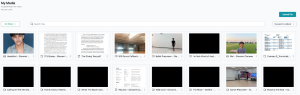
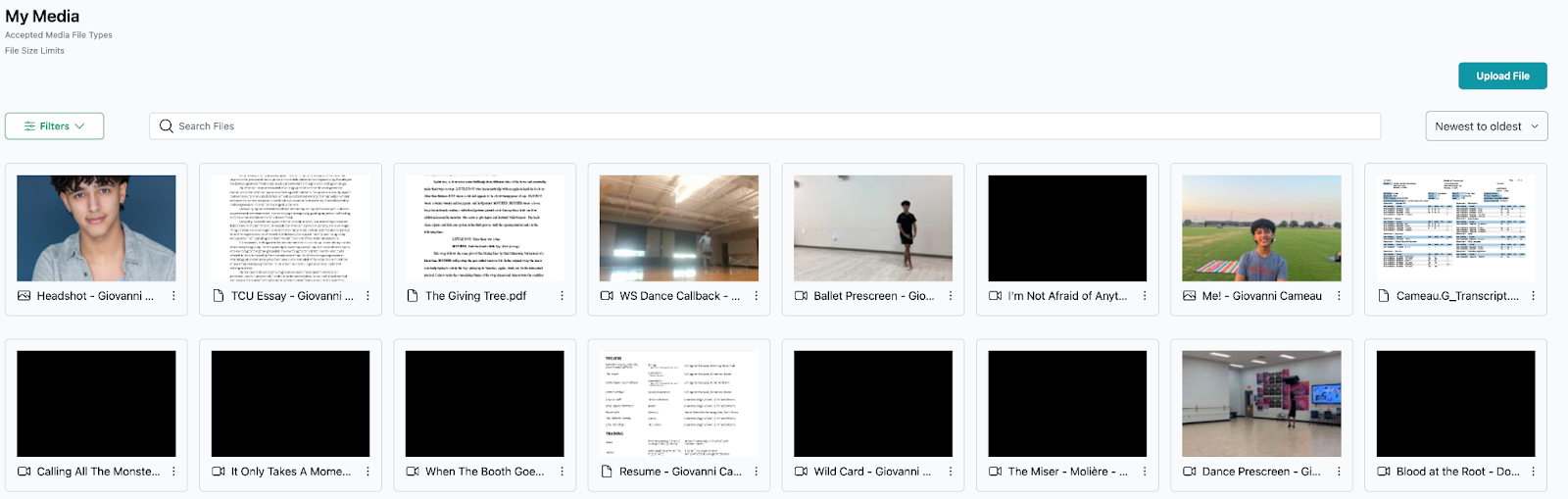
The needed materials for your prescreens may vary depending on the school you are applying for or the program you are interested in. Most commonly, BFA Musical Theatre students are required to submit a variety of songs, monologues and dance screenings. These screening videos are housed in Acceptd’s Media Library. When you apply to a program through Acceptd, schools may request specific materials from you. The Media Library allows you to quickly select the pieces you’d like to submit with ease.

When uploading your videos, make sure they follow the guidelines of the Musical Theatre Common Prescreen (MTCP). As the concept of prescreens has become more popular, colleges have endorsed the MTCP requirements to make auditions more accessible for all students. Keep in mind that certain colleges will not follow the MTCP, and their requirements can be found in their audition guidelines.
There is a stigma in the college auditions world that you need a fancy backdrop or equipment to film your prescreens. Guess what, you DON’T! If those materials are accessible and affordable for you to use, do it if it makes you feel more confident. Colleges don’t care about who has the priciest setup or fanciest transitions; they want to see your talent!
That said, make sure you film in a way that accurately reflects your skills. You should aim for good lighting, a solid or non-distracting background, and filming on a device that captures good audio with minimal feedback.
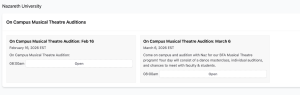
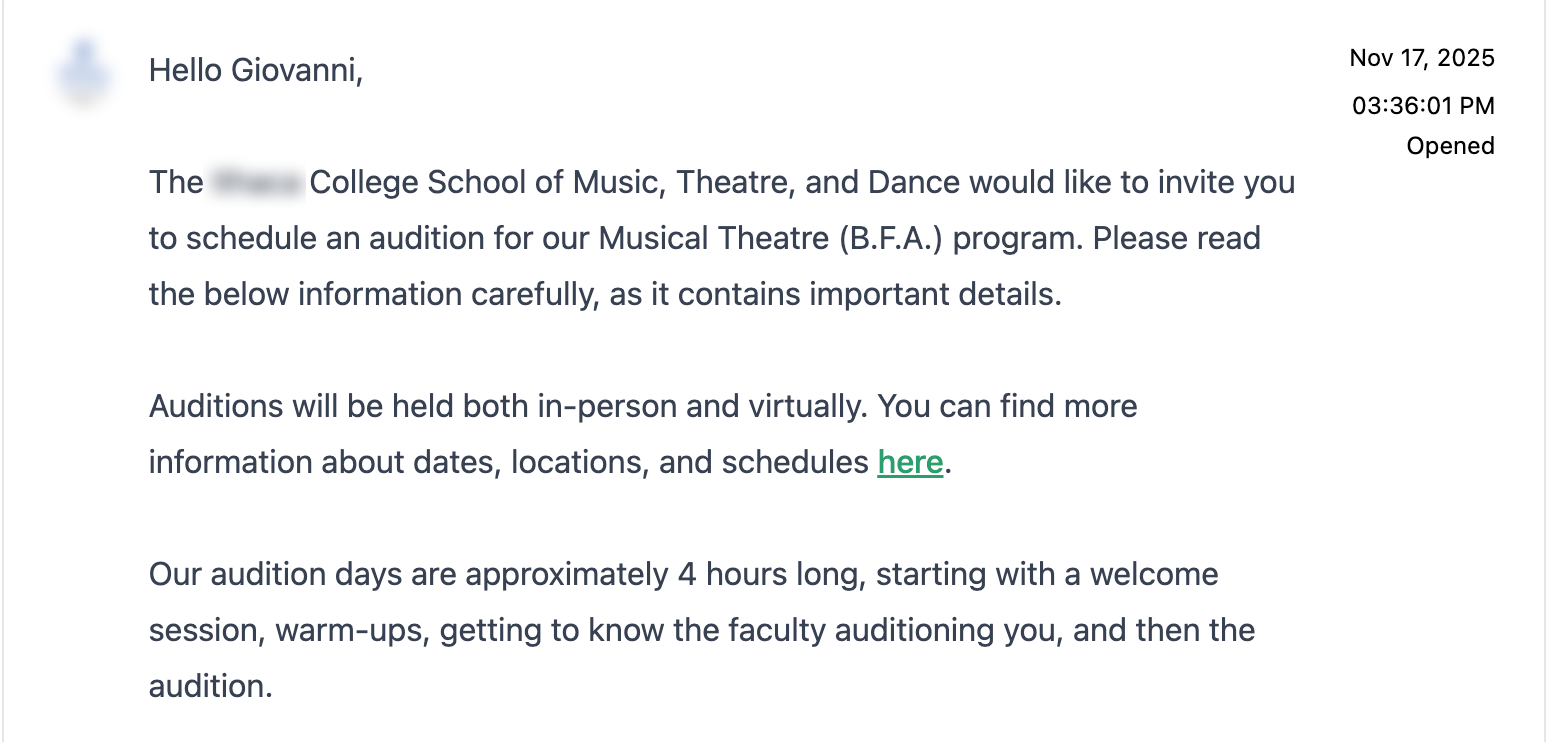
After the chaos and many breakdowns while filming, you will finally be able to submit those prescreens! Upon submitting, colleges will be able to communicate with you via Acceptd. If you receive a callback from a school, you will be able to schedule your audition through the TIMESLOT page on the Acceptd website.
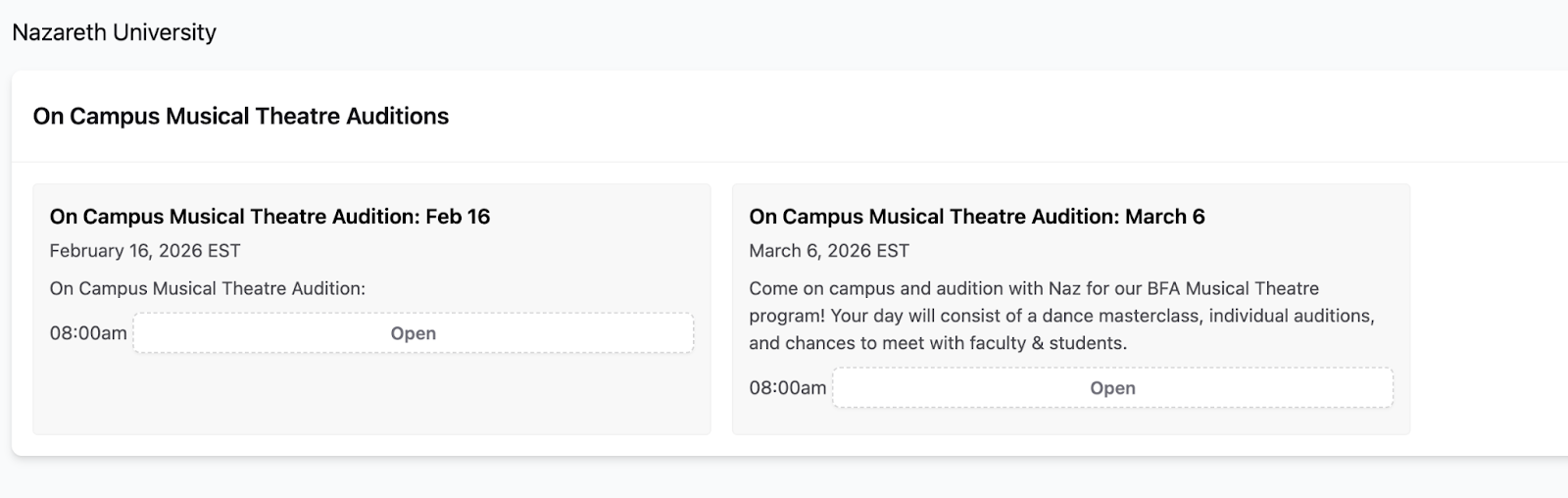
As soon as you submit prescreens, colleges may offer you a CALLBACK! Callbacks allow applicants the opportunity to audition in person with a school. While many students audition on campus, I found it most affordable to schedule my auditions during Chicago Unifieds. This allowed me to save so much money on additional flights and get the majority of my callbacks done during one week.
While most high school students apply for two to five schools, it’s common that MT applicants will apply for more than ten. I know people who have applied for over 30! I was incredibly blessed throughout the prescreen process, and I am beyond grateful for the opportunities it brought. I started my list with 20 schools, but ultimately pursued 13 auditions.
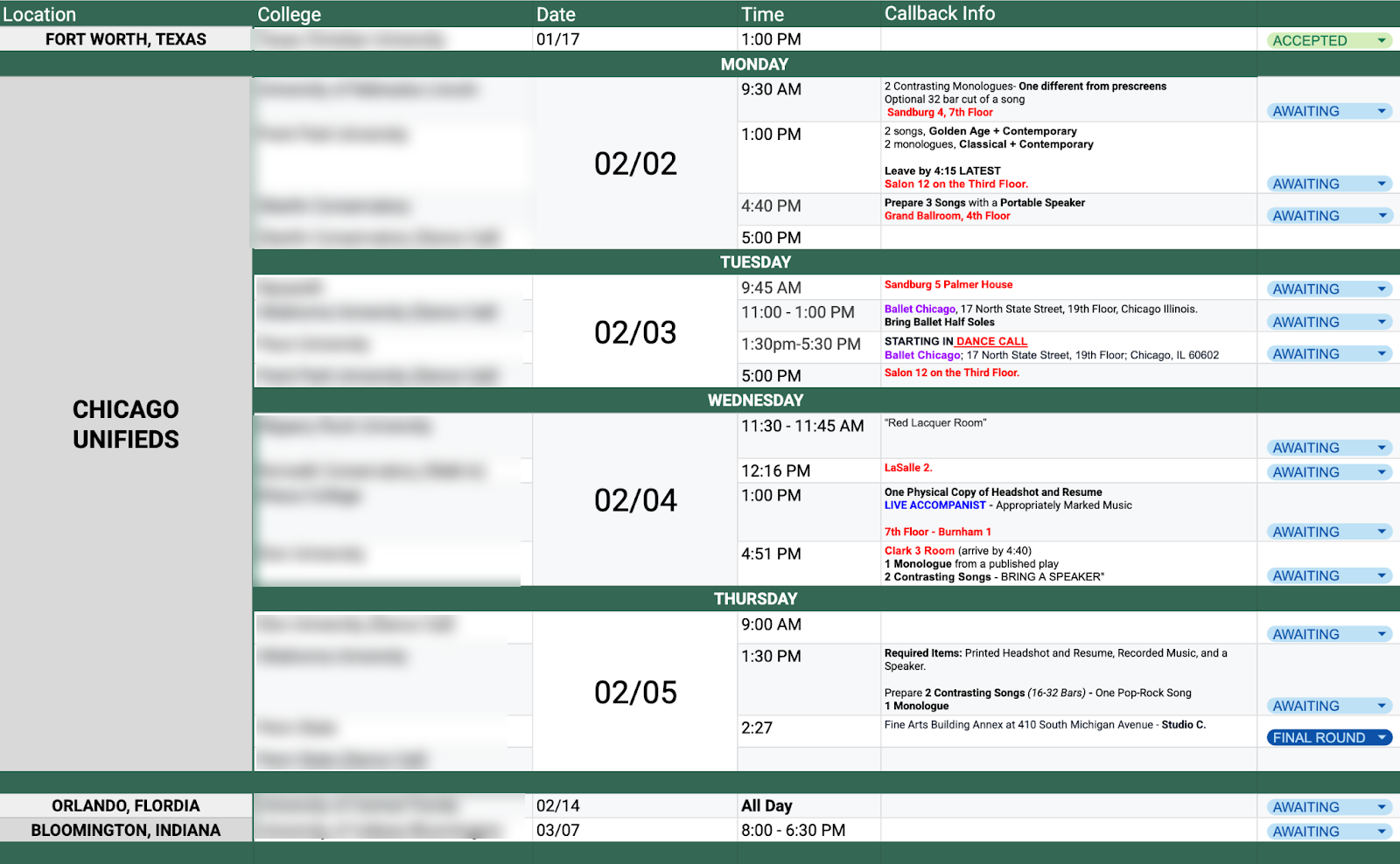
Because MT applicants are applying for so many programs, it’s incredibly important to keep your schedule organized. Acceptd’s website will NOT notify you if you schedule auditions at the same time; you must take responsibility for staying on top of your schedule. I found it super useful to create a Google Sheets spreadsheet that tracked my academic, prescreen, and callback status.
While you are receiving callbacks, make sure to take note of their requirements and locations. An example of this is how schools will ask you to prepare your vocal audition tracks. While the majority of my schools asked me to bring a speaker and prepare tracks, there are many that will have a live accompanist in the room, so you will need sheet music. Pay close attention to the details they share in your callback notification!
For a good minute, I didn’t think schools would take my resume seriously! I am a high school student with little professional experience, and not much training, but I can assure you they take them as seriously as your final audition. While preparing your resume, there are some specific formatting standards and details that will make you stand out from the application pool.
Formatting
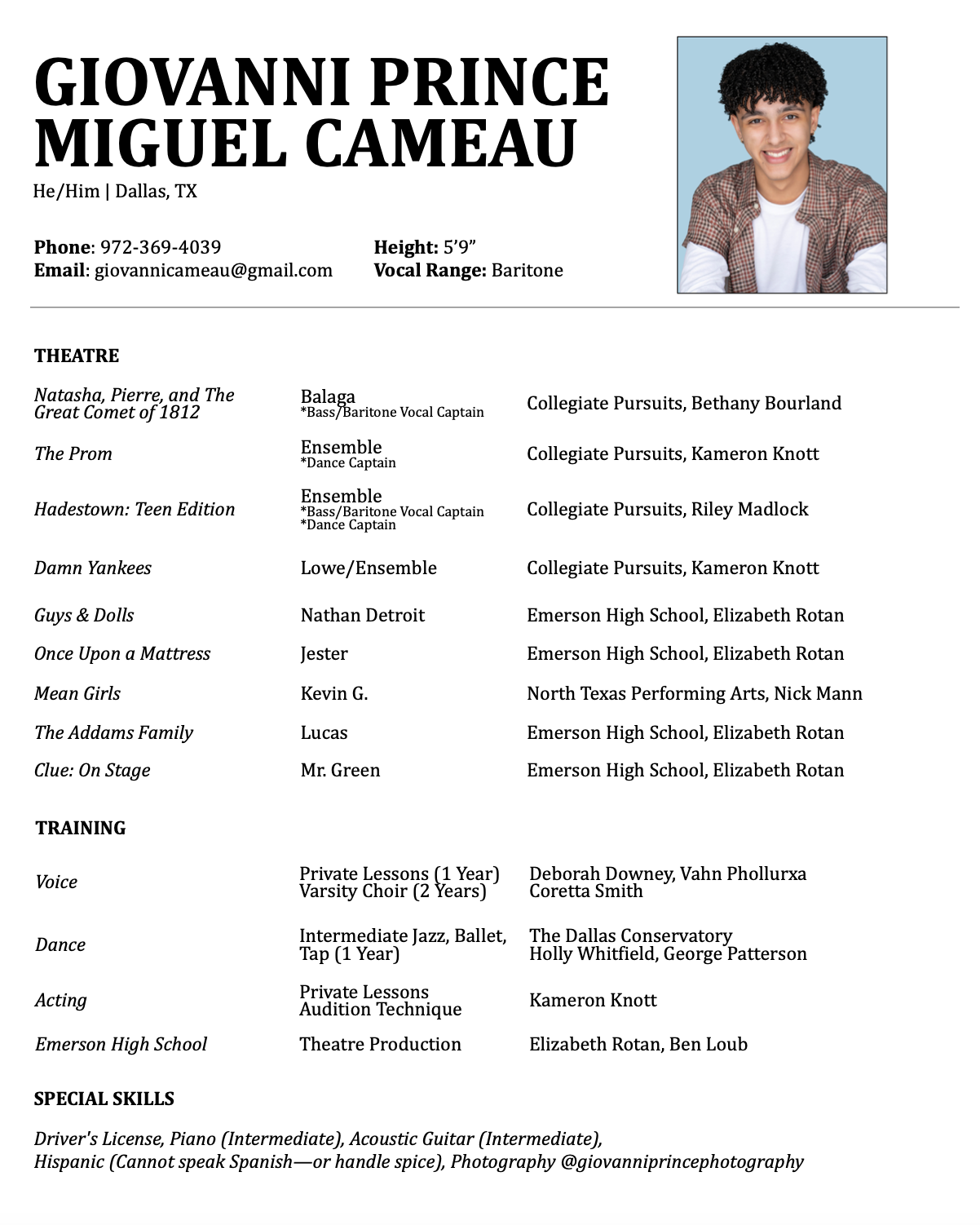
The header of your resume should have your name spelled in LARGE, BOLD LETTERS. Below it, list your contact information and additional details such as your height and vocal range. Information such as eye color, hair color and weight used to be more traditional, but as times have progressed, this information has been found unnecessary to include.
Your headshot should be printed on 8×10 PHOTO PAPER. Your resume should be stapled to the backside of your headshot, so both items are visible on either side. If you print your resume on normal-sized paper, be sure to trim the edges after stapling to adhere to the 8×10 page requirement.
I recommend ordering headshots from PrintHeadshots.com. They send printed, properly formatted headshots and resumes in bulk at affordable prices. They also print resumes on resume paper, but I found it more affordable to print my own at my public library!
The rest of your resume should be split into three distinct sections: performance history (“theatre”), training, and special skills. Accolades and achievements are also important to share, but they are not necessary. Feel free to include them if you have the additional space in your resume!
Section 1: “Theatre”
Your performance history should include six to eight roles that highlight your versatility as a performer. Try to show a variety between leading, supporting and ensemble roles. This is also the time to include if you have ever been a student captain! Divide this section into three columns and include the following from left to right: Show Name, Role, Company AND/OR Director. Most professionals will split the third section into a fourth column to include both, but because college recruiters know that we are students with little to no professional or regional experience, it’s unnecessary.
Section 2: “Training”
The training section is always the most intimidating to fill out. This section should reflect your current skill level in acting, singing and dancing. If you have no training at all, make it your priority in the weeks leading up to your senior year to get in vocal lessons, dance classes, and even private coaching sessions. This process can be extremely expensive, but I speak from my own experience when I say it’s possible! I applied for scholarships, grants, and got myself a job so I could start getting myself into classes.
Section 3: “Special Skills”
This is where you can really get a college’s attention. Your special skills should highlight any unique skills or hobbies you have that set you apart from other applicants. Keep in mind that your skills don’t have to be so serious; use it as a moment to share something about yourself. One of my special skills was “Hispanic (cannot speak Spanish or handle spice).” It gives schools something to ask you about and, ultimately, to get to know you better!

“That girl with the pink shoes really stuck out to me!”
Musical Theatre faculty are reviewing hundreds of applicants per day, so the outfit you wear can give schools something to physically remember you by. There is an incredibly slim chance that your outfit will hurt your chances of getting into a college theatre program, but branding yourself authentically might make you stand out!
In the months leading up to Chicago Unifieds, I started to do a lot of online shopping to find outfits I would feel most confident in. This was also the time of year when I’d send out my Christmas list to my family; take advantage of this! Eventually, I came across a pair of “Peanut Butter” Dr. Martens’ Lowell Loafers, and I became obsessed. I ordered the shoes just a few days after scrolling upon them, and they immediately became my staple piece to my college audition outfits.

One of my best memories while wearing the shoes was my on-campus audition for Texas Christian University. After performing my two songs and monologue, the head of MT, Jennifer Engler, had asked me to take a seat. Sitting across from me at the table with her was the rest of the TCU MT Faculty, including Jessica Humphrey. As soon as I sat down, Jessica had made it a point to compliment my shoes. From there, the first few minutes of my interview consisted of me babbling how I scrolled across a Pinterest ad and fell in love.
With that being said, although it’s nice to stand out, it’s more important that you feel confident in whatever you wear.
Words cannot express how much fun I had during Chicago Unifieds. I got to go to fancy dinners, audition for my dream schools and meet really cool people. But with that being said, I feel like my time in Chicago was successful because of the much preparation that went into my process. There’s no clear guide in what Unifieds is like, and you never really know what to expect, but this is what I’ve gathered from my own experience.
- To start, Chicago Unifieds is held at the Palmer House Hotel. The majority of schools will reserve ballrooms at the hotel to hold their auditions, but NOT all schools. Make sure to check the locations where your audition is held! Many schools will choose locations a short distance from the Palmer House, such as the Chicago Ballet and the Fine Arts Building.
- No audition is the same. Literally at all. In each audition I had, truly nothing could prepare me for what was going to happen in the room. As nerve-wracking as that may sound, it’s a really genuine and spontaneous experience. I feel like so many people had put in my brain that there was a certain way to prepare for an audition and go about the whole process, but as soon as I walked into my first one, I realized that I was auditioning for the college just as much as they were me.
- If you pass a prescreen and plan to schedule an in-person audition, you should realize that a college has already recognized your talent. I felt immense pressure to be the best singer or actor when I walked into the audition room, but, truth be told, they already know you can do those things; now they just want to see who you are as a person. They want to know what type of person they will be working with for the next four years, which is why it’s so important to be your true self. Schools want to know all the silly or sarcastic traits about you, and if they aren’t vibing with it, then it may just not be the school for you!
- Now, let’s talk about Walk-Ins. One thing many people don’t know about while going into Unifieds is that many schools will have available audition slots known as walk-ins. Don’t rely on walk-in auditions! There is no guarantee that walk-ins will be available, or that any will work with your schedule, so make sure to plan accordingly. However, walk-ins are great opportunities to introduce yourself to new schools and open up your school options.
- Don’t rush your goodbye. After performing your pieces, don’t be so quick to leave the room! Take a moment to engage with the school’s faculty, ask any additional questions and thank them for their time. Something that was important to me while learning about programs was that they made diversity a priority, so I was sure to ask about the opportunities their programs offered to students of color. This is your final impression before they make a decision, so make it count!
- Send thank-you emails! If you missed step 5, you can always make a recovery by reaching out to a school and thanking them for the time you spent while auditioning.
While in Chicago, you’re going to want to meet people and make friends, but remember that it’s very important to prioritize yourself this week. Kids are insecure and just as nervous as you, so make sure to avoid all the drama and keep your audition process private. Be the kindest person in the room, because in this industry, being a good person is what will get you the furthest.
Alongside the many successful auditions you will have, there will always be rejection. The most meaningful piece of advice I have for handling rejection is recognising that rejection is redirection. This process is beyond demanding, mentally taxing and overconcentrated. Colleges must accept small class sizes to ensure their students have purposeful, personalized training experiences. Rejection is not a reflection of your talent.
One thing I had to accept, especially as I handled rejections throughout my own process, was that if I were to be denied admission to a school, that program wasn’t meant for me. If a college is interested in you, it will show! Be open-minded to learning about new programs, and don’t pay attention to commercial websites stating the “TOP 10 BEST THEATRE COLLEGES IN THE COUNTRY!”
You will land exactly where you belong.
At this point in the year, you’ve survived a lot! You’ve made it through prescreens, properly prepared for callbacks, and had the chance to either audition on campus or at Unifieds. Give yourself a pat on the back! Not only does it take a surreal amount of time and money, but also confidence and courage.
Most schools release their final offers and decisions from February to April. During this time, you may hear one of four decisions. Rejection, where you will not be able to continue with that school’s program. Deferral, where a school may offer you a spot in a different program from the one that you may have applied for. Acceptance, where you have been offered a spot in the incoming BFA Musical Theatre class. Or, you may have been Waitlisted.
For acceptances and deferrals, you will have until May 1 (National Commitment Day) to commit to a school, before a college no longer has to honor its offer. If you are waitlisted for a program, there is no guarantee of when you will hear back from the school. I know of kids who didn’t find out til the summer! If you are waitlisted from a program you really like, make sure to explore other offers before solely expecting a spot in a school’s program to open up.
Today is Feb. 17, 2026, and I’ve already received some of my first few offers! I’m incredibly excited to see where this journey takes me, but I’m just as scared. Instead of being judged by your academics or something palpable, it’s based on your talent and what you bring to the room, which alone takes a lot of guts.
If you’re reading this and also find yourself in the college audition process, just know I’m so proud of you! Remember how valuable of an artist you are, and don’t let a GetAcceptd notification define your worth.
If you have any questions or want more info on my journey, feel free to contact me at [email protected]. You got this! 🙂